
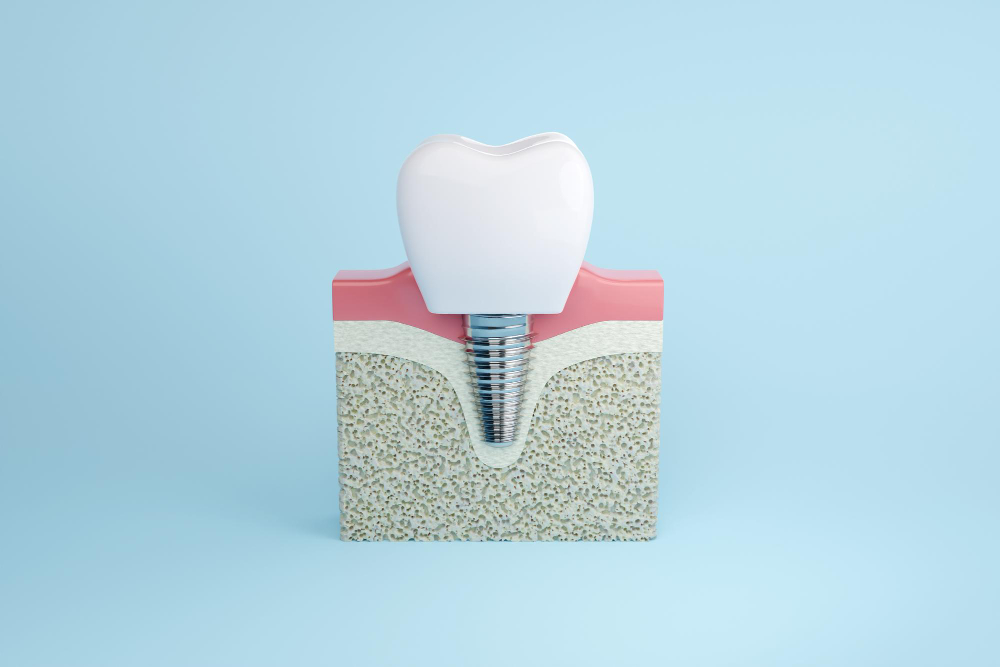
What is a Dental Implant?
A dental implant is a small, strong post placed in your jaw to replace a missing tooth. Dentists use dental implants as a long-lasting tooth replacement option. The dental implant procedure involves placing the post, which acts like a tooth root, into the jawbone. Later, a crown is attached to the post. This creates a natural-looking and stable new tooth. Many people choose dental implants because they look and feel like real teeth. In fact, dental implants are now a popular solution for missing teeth and improving oral health.
How Does a Dental Implant Work?
First, the dentist places the implant post into your jawbone. Over time, the bone grows around the post. This process is called osseointegration. As a result, the implant becomes very stable. After healing, the dentist attaches a connector, called an abutment, to the post. Finally, a custom-made crown is placed on top. This crown matches your other teeth in color and shape. Because of this, your new tooth blends in naturally.
Benefits of Dental Implants
Dental implants offer many advantages over other tooth replacement options. For example, they:
Additionally, dental implants can boost your confidence and improve your smile.
Who Can Get a Dental Implant?
Most healthy adults can get a dental implant. However, you need enough bone in your jaw to support the post. Your gums should also be healthy. Some people may need extra treatment, such as a bone graft, before getting an implant. For example, smokers or people with certain health problems may need special care. Therefore, your dentist will check your mouth and health history before recommending dental implants.
What to Expect During the Procedure
The dental implant procedure usually takes several steps:
Most people feel only mild discomfort after each step. Your dentist will explain what to expect at each stage.
Aftercare and Recovery Tips
Proper care helps your dental implant last a long time. Here are some tips:
With good care, your dental implant can last for many years.
Risks and Considerations
Although dental implants are safe, there are some risks. For instance, infection, injury to nearby teeth, or implant failure can happen. However, these problems are rare. Choosing a skilled dentist lowers your risk. Also, following aftercare instructions helps prevent issues. If you have health problems like diabetes, talk to your dentist. They can help decide if dental implants are right for you.
In summary, dental implants are a strong and natural-looking solution for missing teeth. They can improve your oral health and your smile. Consult a qualified dentist to find out if dental implants are right for you.
Sources: American Dental Association (ADA), World Health Organization (WHO), Centers for Disease Control and Prevention (CDC)